As more UK cities introduce a overnight visitor levy to help fund destination marketing, major events and improvements to the visitor economy, the hospitality sector is weighing up what this means in practice. While supporters see it as an opportunity to reinvest in the future of their cities, others are keen to ensure the benefits are clearly demonstrated and communicated to both businesses and visitors.
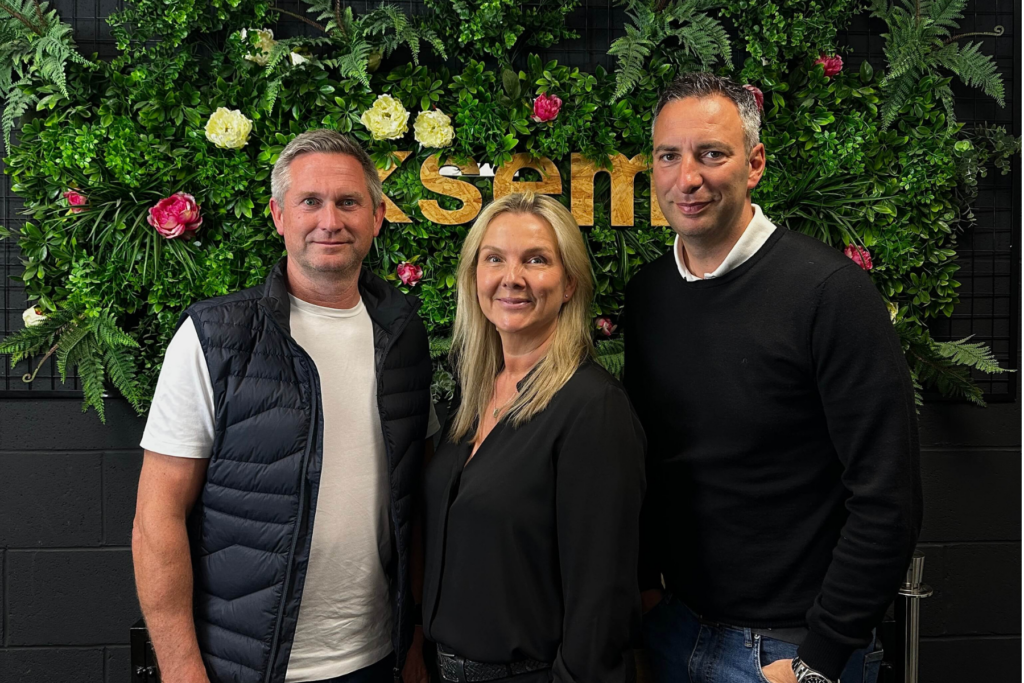
To explore both perspectives, we spoke to three beam members working at the heart of their respective destinations. Kerry Truelove (Cluster Sales Manager at Malmaison Hotels Manchester), Scott Brown (Group Director of Sales and Marketing – Kingfisher Hospitality Group) and Mary Doogan (Director for the London Hotel Association) share their views on the opportunities, challenges and lessons learned from the introduction of a overnight visitor levy in their cities.
Are you in favour of the levy?

Mary: Simply put no.
However, if our collective and considered view that taxing accommodation providers and/or its patrons is not heard and the government chooses to introduce a levy regardless of the negative impact to the industry which are being articulated, then we want the government to engage with us as operators, as developers, as owners, to understand how implementation can be achieved without heavy burdens operationally and commercially.
Put in into simple terms, we want ‘a seat at the table’.
The current tax system places the highest tax burden on the hospitality sector of any major industry in the UK; the sector pays an effective tax rate of 82p for every £1 of pre-tax profit, compared to all 11 main sectors of the economy where the average is 50p in every £1 and 40.5p in the banking and finance industry.
Why are the government placing yet another ‘tax’ on our industry?

Kerry: There is a clear argument for the introduction of the levy, notably around the goal of reinvesting directly into Manchester’s wider infrastructure and visitor economy, which in the long-term is crucial to our continued growth and appeal as a global destination location.
However, from the perspective of our two Manchester Malmaison properties (Piccadilly and Deansgate), any additional cost introduced to guests must be done so with careful consideration and communicated with complete clarity from the offset. Even the slightest increases can raise questions, so visibility and consistency of messaging are key.
Am I supportive in principle? Yes, but this support is dependent on clear, ongoing visibility of how the funds are allocated, and whether this translates into tangible benefits for both visitors and businesses, particularly in driving demand, enhancing infrastructure, and strengthening Manchester’s position as a leading destination. If this doesn’t materialise, then customer support will turn to scrutiny.

Scott: In principle, yes, but how a levy is run matters far more than whether it exists. I saw it work well in Manchester, where the Accommodation BID was designed and governed by hoteliers. The money went back into the things that bring people to the city and give them a better stay. That’s the model I’d back every time.
My concern is when levies launch without hoteliers in the room. Hotels collect the money and our guests pay it. If we have no say in how it’s spent, and no guarantee it’s reinvested in the visitor economy, it becomes a tax on tourism rather than an investment in it.
How do you think the levy will impact your city?
Kerry: Manchester has long established itself as a highly competitive and desirable location. This is backed up by a well-balanced mix of corporate, leisure and events-driven demand. Therefore, this volume of tourism does provide the opportunity for the levy to deliver real tangible positive outcomes, provided the revenue is reinvested effectively, particularly into destination marketing, transport infrastructure and attracting major events. Therefore, those benefits need to be made clearly visible to visitors.
There is a valid observation to be made which is that the city’s growth to date has been achieved without such a charge, so there is a question around maintaining price competitiveness against other UK destinations, and an argument to be had whether the levy is necessary and a risk to benefit ratio of introducing it.
Sustaining this success will rely on ensuring visitors continue to perceive strong value for money despite the additional cost. Encouragingly, comparable cities such as our neighbours in Liverpool have implemented a higher levy without negatively impacting demand.
Scott: As a group, we’re not looking at one city, we’re looking at several. That’s where I think the biggest challenge lies. If every destination designs its own scheme, with a flat charge here, a percentage there, different exemptions and different reporting, the complexity lands on operators and confuses guests. A conference organiser comparing three UK cities shouldn’t need a spreadsheet to work out the true cost of a room night.
Where it’s done well, a levy can be a real positive. It gives destinations a dedicated pot to compete for events, conferences and leisure visitors at a time when public tourism funding has been squeezed. But consistency and industry governance will decide whether it helps or hinders.
Mary: Coupled with a tourism VAT, which is disproportionally higher at 20% compared to between 7-10% throughout Europe, the UK and London in particular, becomes less attractive and appealing to other European cities. This is a consideration for the tourist traveller, the corporate traveller and the MICE travel markets.
We are particularly concerned that without a full transparent economic assessment the likes of the convention and event market business will be significantly impacted. Given that this business is booked, priced and funded 3-5 years in advance, the negative impact may not be known for years to come and it will simply be too late to unpick and influence which would be dyer for our industry and the wider visitor economy.
There are other direct and indirect consequences currently affecting the London hotel market today, all of which place significant burden for the wider industry when you consider investment and growth of the industry, including:
- the likes of future investment from Private HNWIs and Family Offices when you consider the burden of responsibility in relation to inheritance tax on future generations, whether investment is stunted as a result;
- Property taxes Business Rates revaluations
- National Insurance hikes and National Living Wage increases
- The Employment Rights Act
Individually, none of these matters are detrimental on their own, but the culminative effect places significant concerns financially as to how the London Hospitality market continues to thrive and lead on a global stage. UKH have already suggested that the introduction of an OAL could see 33,000 job loses across the industry.
Have you noticed any benefits so far?
Mary: No. Taxing an industry should not be seen as the best way for the treasury to increase their coffers. The government needs to support growth. It needs to encourage investment and it needs to champion opportunity. The government, instead, wants to tax growth.
What further supports our concerns is the data now proving the effect of the levy introduction in cities such as Amsterdam and Venice. The significance here is that the levy was introduced to reduce visitor numbers and of course it has had this effect. The number of travellers is down YOY, and with a downturn in demand and greater supply unemployment is on the rise. Hotel investment is also down. The reduction in visitor numbers is coming from corporate, congress business and leisure. The additional levy is simply a burden most are not willing to pay.
Looking at Amsterdam and Venice is a key to ensuring these issues do not affect London and England more generally if a levy is introduced.
Kerry: At this early stage, it is still too soon to identify direct, measurable benefits at property level. However, what has been encouraging is the increased dialogue around the visitor economy and a stronger focus on long-term destination planning.
If the levy delivers on its intended outcomes, such as enhanced city promotion, improved infrastructure and increased event attraction, then the benefits should become more evident over time.
Scott: In Manchester, yes. With hoteliers at the table, the spend went on demand drivers: supporting major events, destination marketing, and a cleaner, safer, more welcoming city centre. The charge was modest and clearly explained, so guest pushback was minimal. It worked because the industry felt it owned it, and that sense of ownership is the lesson I’d want every new scheme to learn.
What implications will this have on your hotel’s TTV?
Scott: A flat, modest charge has had a negligible effect on conversion in our experience. Percentage-based levies are a different conversation. They scale with rate, so they bite hardest on peak dates, longer stays and, crucially for BEAM members, group and MICE business. On a multi-night conference with a large room block, a percentage levy on every room night adds up quickly. Those events often compete with European cities, not just other UK ones.
There’s also a distribution risk. If levies aren’t displayed consistently across booking channels, we could look more expensive than a competitor simply because of how the price is presented. That’s where I’d expect pressure on TTV.
Mary: We believe the introduction of a levy will negatively impact demand into London thus increasing supply, which will have a negative knock-on effect on ADR and RevPAR. We believe rate caps and corporate rate limits would be impacted in particular.
Kerry: The current global economic situation is precarious for our sector, so there is an understandable level of caution as to any negative impact an increase in the cost of a stay, even a marginal one may have on visitors coming to the city and our two Manchester properties.
This isn’t just a concern for our leisure and tourism visitors, but also for corporate clients, as even a relatively small increase under a business’s travel policies can come under increased scrutiny, potentially placing our properties outside of their policy, which have a detrimental influence on booking behaviour, especially for high-volume or cost-controlled travel.
The impact is less pronounced within higher-rated or experience-led segments, where the overall value proposition remains strong.
As I have mentioned already, transparency about the levy from the offset is crucial, particularly at the quotation stage, to avoid any unexpected costs at check-in, that could be received negatively.
Are you taking any measures to mitigate any negative impact?
Kerry: Absolutely. The guest journey is of paramount importance to us at Malmaison, and we are taking a proactive approach in response to the levy.
Our focus includes:
- Clear and upfront communication with clients to avoid any pricing surprises
- Strengthening relationships with corporate bookers to reinforce value beyond rate alone
- Enhancing the guest experience to ensure it fully justifies the overall cost
- Adopting creative sales strategies, including taking the brand directly to clients through pop-ups and engagement activity
Ultimately, while there may be a marginal increase in cost, our priority is to ensure that perceived value grows even more significantly.
Scott: We’re focusing on four things across the portfolio. First, transparency, so guests and clients understand what the levy is and what it funds. Second, getting our systems and contracting ready, so the levy is built into group and MICE proposals from the outset rather than appearing as a surprise at contract stage. Third, working with organisers early on events that are already in the pipeline. Fourth, engaging with BIDs, destination bodies and local authorities in every city where we operate, to push for hotelier representation on how the money is allocated.
My message to anyone designing a levy is simple: put it in the hands of the people who collect it and keep it consistent. Do that, and it can be a genuine asset to the destination.
Mary: It’s impossible to make informed decisions now as information surrounding the levy is scarce. How it will be introduced, whether it is to be fixed or a percentage of rate, what exemptions there may be are all serious considerations and no one can answer these questions for us yet.
We will push central government and the GLA to make these concessions before they introduce the levy:
- To commit to not introducing it until such time as a full economic impact is completed and understood and that systems and businesses are updated to service it.
- To ensure the levy is excluded from the rate so it does not make London uncompetitive.
- To make concessions or a full exemption for events and convention business.
- To ring-fence the income for destination marketing.
For more on this subject, take a listen to our podcast for a discussion between beam’s Chair, David Tremmil, Andrew Clarke from The Business Travel Association (BTA) and Jonathan Read from Leonardo Hotels. Watch it here.